
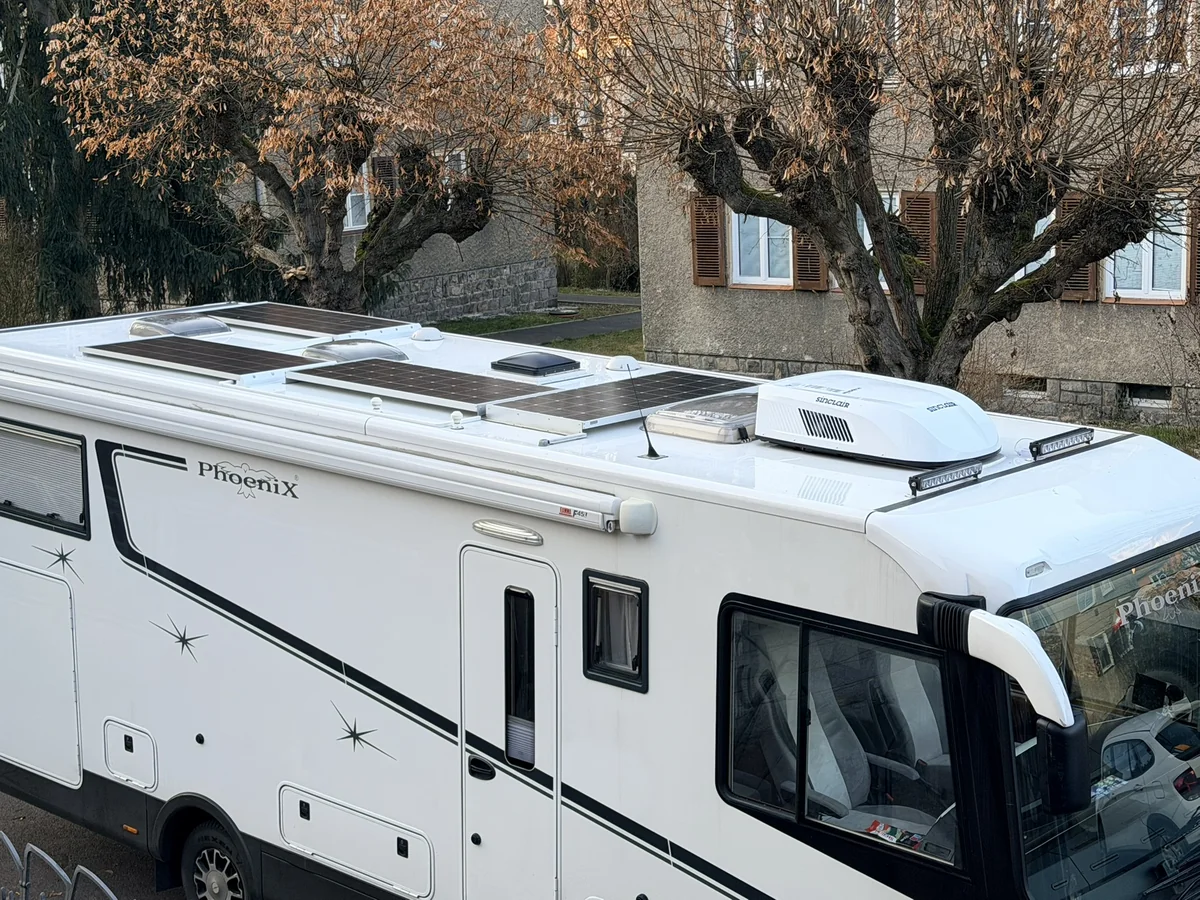
Když jsem v roce 2016 přebíral Phoenix 8200 BML, měl z výroby jeden solární panel Solara 110 W. Na tehdejší dobu naprosto běžná výbava — stačila na udržování olověných baterií během letního táboření. Jenže způsob, jakým dnes s autem cestuji, je úplně jiný. Starlink, notebooky, klimatizace, rychlonabíječka pro elektrokola. S jedním panelem 110 W bych dnes nevydržel ani přes jednu noc.
Tenhle článek není přepis katalogu. Je to reálný vývoj jednoho konkrétního vozu během deseti let — včetně chyby, kterou jsem udělal a o které mi nikdo dopředu neřekl.
Původní stav: Solara 110 W a praskající pojistka
Originální panel Solara S440M34 byl jištěný 10ampérovou pojistkou na 12V napájení. Pojistka opakovaně praskala — výsledkem bylo, že celý solární systém přestal nabíjet a člověk si toho všiml obvykle až ve chvíli, kdy byly baterie téměř vybité. Žádný alarm, žádné varování, žádná notifikace.
Po osmi letech provozu navíc panel přirozeně ztratil část výkonu. Degradace monokrystalických panelů je standardně kolem 0,5 % ročně — po osmi letech tedy asi 4 %. V praxi to znamenalo, že z původních 110 W reálně dodával tak 90 W při ideálních podmínkách. Přínos byl minimální.
| Parametr | Hodnota |
|---|---|
| Panel | Solara S440M34 |
| Výkon | 110 W |
| Rozměry | 1 480 × 670 × 35 mm |
| Hmotnost | 10,5 kg |
| Regulátor | původní PWM |
| Rok instalace | 2016 (výrobní) |
První modernizace: Phoenix Service Center Schlüsselfeld (2024)
V roce 2024 jsem se rozhodl zajít přímo ke zdroji — do výrobního servisu Phoenix v německém Schlüsselfeldu. Věděl jsem, že chci výrazně víc výkonu, ale nechtěl jsem vrtat nové průchodky ani přestavovat interiér. Servis navrhl výměnu za dva panely SUNSET AS 220-6.
Původní Solara šla pryč. Přišly dva nové panely, nový regulátor MPP 440 CI, nové držáky, nová kabeláž. Celkový výkon se zdvojnásobil — ne, zdvojnásobení je málo. Vzrostl čtyřnásobně na 440 W. Oproti původnímu stavu to byl obrovský rozdíl, který jsem okamžitě pocítil i v praxi.
| Parametr | Hodnota |
|---|---|
| Panel | SUNSET AS 220-6 |
| Výkon | 220 W / panel |
| Celkový výkon | 440 W (2 panely) |
| Rozměry | 1 475 × 660 × 35 mm |
| Hmotnost | cca 12,5 kg / panel |
| Regulátor | MPP 440 CI |
Druhá etapa: kompletní přestavba elektrické soustavy
O rok později přišla kompletní modernizace celé elektrické instalace — přechod na LiFePO₄ baterie, nový měnič Victron MultiPlus-II 3000 VA, nový MPPT regulátor Victron 150/60 a jako součást celé akce také dva nové solární panely Büttner Dometic MT Black Line 170 W (z e-shopu Nomádem.cz — specializovaný e-shop pro karavanisty). Přestavbu zajišťoval Jiří Hnízdil.
| Parametr | Hodnota |
|---|---|
| Panel | Büttner Dometic MT Black Line 170 W |
| Výkon | 170 W / panel |
| Rozměry | 1 480 × 660 × 35 mm |
| Články | 72 článků (lepší výkon při horším světle) |
| Rám | robustní hliník, vhodný pro obytné vozy |
| Kde koupit | Nomádem.cz — specializovaný e-shop pro karavanisty |
Celkový instalovaný výkon tak vzrostl na 780 Wp: 2 × 220 W + 2 × 170 W. Sedminásobek oproti původnímu stavu.
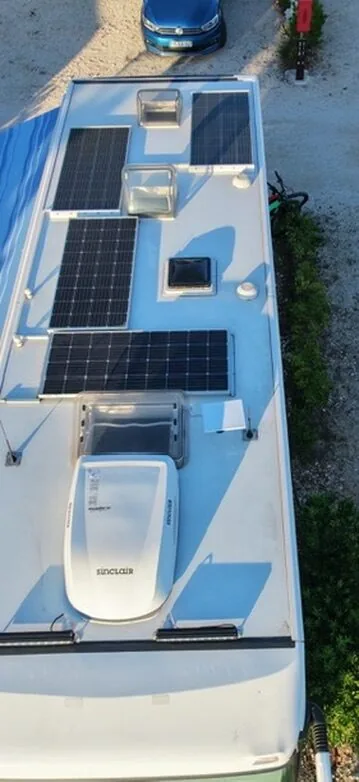
Regulátor Victron SmartSolar MPPT 150/60 zvládne vstupní napětí až 150 V a výstupní proud 60 A. Pro čtyři panely celkem 780 Wp je to správně dimenzovaný regulátor s dostatečnou rezervou. Připojení přes Victron Cerbo GX umožňuje sledovat výkon v reálném čase.
Problém, který jsem si zpočátku neuvědomil
Panely byly zapojeny klasicky — všechny čtyři za sebou do jedné série. Takové řešení používá mnoho servisů, protože je rychlé, jednoduché a při stejných panelech naprosto správné.
Ale moje sestava nebyla ze stejných panelů. Měl jsem 2 × 220 W a 2 × 170 W — čtyři panely, dvě různé specifikace.
A tady je problém. V sérii zapojené panely se musí domluvit na jednom proudu — a vždy vyhraje ten nejslabší. Stejně jako nejslabší článek určuje pevnost řetězu, i v sériově zapojených panelech určuje pracovní proud nejslabší panel. Výsledkem bylo, že výkonnější 220W panely pracovaly v podstatě jako 170W panely a nezanedbatelná část jejich potenciálu šla vniveč.
Navíc sériové zapojení je velmi citlivé na zastínění. Stín od klimatizace, satelitní antény, Starlinku nebo větve stromu způsobí, že výkon výrazně poklesne celému řetězu — ne jen panelu, který je ve stínu. Při cestování, kdy je střecha obsazená různými zařízeními, je tohle reálný problém každý den.
Věděl jsem, že musím zapojení změnit. Otázka byla jak — bez vrtání nové střechy a bez výměny kabeláže.
Proč jsem nechtěl měnit kabeláž ani vrtat nový otvor
Každý nový otvor ve střeše obytného vozu je potenciální místo zatékání. Já žádný nový dělat nechtěl — a ukázalo se, že to ani nebylo potřeba. Ale musím vysvětlit, proč jsem nemohl jednoduše zapojit všechny čtyři panely paralelně a mít klid.
Původní kabeláž byla dimenzována na výrazně menší výkon. Pokud bych zapojil všechny čtyři panely paralelně, proud ve stávajících vodičích by se téměř zdvojnásobil. A to je problém, protože:
Pokud chci přenést stejný výkon, mohu buď zvýšit proud, nebo zvýšit napětí. Zvýšení proudu ale přináší ztráty přímo úměrné jeho druhé mocnině — Pztráta = I² × R. Dvojnásobný proud znamená čtyřnásobné ztráty ve vodičích.
Naopak vyšší napětí při stejném výkonu znamená nižší proud — a nižší proud znamená menší ztráty, menší zahřívání vodičů a možnost využít původní kabeláž. Přesně proto jsou moderní FV systémy navrhovány s vyšším napětím a MPPT regulátory.
Řešení: dvě větve, MC4 Y konektory, žádné nové díry
Řešení se nakonec ukázalo překvapivě jednoduché — stačilo změnit zapojení přímo na střeše, bez zásahu do interiéru a bez nových průchodek. Vznikly dvě samostatné série:
Větev A: 220 W + 220 W v sérii → oba panely jsou stejně výkonné, takže se v sérii vzájemně nesrážejí.
Větev B: 170 W + 170 W v sérii → stejný princip.
Obě větve jsou pak paralelně spojeny pomocí MC4 Y konektorů. a do původní průchodky vede stále jen jeden plusový a jeden mínusový vodič.
Výsledek? V sérii musí všechny panely vést stejný proud a ten určuje nejslabší z nich. Dvě paralelní větve tohle omezení ruší — každá si vede vlastní proud a na vstupu regulátoru se oba proudy sčítají. Slabší 170W panely už tedy nesrážejí ty silnější. Když se navíc jeden panel zastíní, neklesne výkon celé elektrárny, ale hlavně té větve, ve které ten panel je.
Občas se píše, že paralelní větve na jednom MPPT „pracují každá ve svém optimálním bodě". Tak to není. Victron SmartSolar MPPT 150/60 má jediný tracker. a oba jeho MC4 vstupy jsou uvnitř paralelně spojené — datasheet to uvádí výslovně. Regulátor tedy hledá jedno společné napětí pro obě větve. Skutečně nezávislé sledování by vyžadovalo dva samostatné regulátory.
Proč to tedy funguje? Obě větve mají po dvou panelech v sérii, takže jim napětí v bodě maximálního výkonu vychází podobně. Společné napětí, které regulátor najde, je pak blízko optima obou. Kdyby se napětí větví výrazně lišilo — třeba dva panely v sérii proti třem — jedna z nich by běžela citelně mimo své optimum.
Při cestování, kdy je na střeše klimatizace, satelitní anténa a Starlink, je rozdíl v praxi citelný.
Výsledky: srovnání stavu tehdy a dnes
| Parametr | Původní stav (2016) | Dnešní stav |
|---|---|---|
| Počet panelů | 1 | 4 |
| Výkon | 110 W | 780 Wp |
| Regulátor | původní PWM | Victron MPPT 150/60 |
| Baterie | AGM (původní) | 2 × 200 Ah LiFePO₄ NG |
| Zapojení | 1 panel | 2 větve × 2 panely v sérii |
| Citlivost na zastínění | vysoká | výrazně nižší |
| Max. nabíjecí výkon | ~90 W (reálný) | až ~700 W |
Hmotnost panelů — výkon není jediné číslo
Při výběru solárních panelů většina lidí řeší výkon. U obytného vozu s celkovou povolenou hmotností 5,99 t (nebo 3,5 t) je ale stejně důležitá hmotnost. Každý kilogram navíc na střeše je kilogram méně pro vodu, elektrokola nebo jinou výbavu. A navíc — kilogramy na střeše jsou horší než kilogramy dole, protože zvyšují těžiště vozu.
Přibližné hmotnosti panelů, které jsem měl nebo zvažoval:
| Panel | Výkon | Rozměry (mm) | Hmotnost |
|---|---|---|---|
| Solara S440M34 | 110 W | 1 480 × 670 × 35 | 10,5 kg |
| SUNSET AS 220-6 | 220 W | 1 475 × 660 × 35 | cca 12,5 kg |
| Büttner Dometic MT Black Line 170 | 170 W | 1 480 × 660 × 35 | cca 11,5 kg |
| Büttner MT SM 210 Power-Line | 210 W | 1 480 × 670 × 35 | cca 13 kg |
| Solarfam 240Wp monokrystal | 240 W | 1 520 × 760 × 35 | 12,8 kg |
Původní Phoenix měl jeden panel 110 W, celkem 10,5 kg. Dnes mám čtyři panely s celkovým výkonem 780 Wp — jejich celková hmotnost vzrostla přibližně o 35 kg. Sedminásobný výkon za 35 kg navíc. Kdybych plánoval šest panelů, byl bych na přibližně 75 kg jen za panely — bez držáků, kabeláže a regulátoru. Tam už bych si výpočet udělal předem.
Celková hmotnost střešní instalace = (počet panelů × hmotnost panelu) + hmotnost držáků + kabeláž + spojovací materiál. Při čtyřech panelech a standardních hliníkových držácích počítejte přibližně s 55–60 kg. Při šesti panelech klidně 80–90 kg — a to jsou kilogramy, které jdou přímo z užitečné hmotnosti vozu.
Na co si dát pozor při montáži
Věci, které bych zdůraznil každému, kdo plánuje podobnou přestavbu:
Pokud máte panely různého výkonu, nikdy je nezapojujte všechny do jedné série. Proud je vždy omezen nejslabším panelem a přicházíte zbytečně o výkon těch silnějších. Řešení: stejné panely do série, různé série pak paralelně přes MC4 Y konektory.
Před výběrem zapojení vždy ověřte maximální vstupní napětí svého MPPT regulátoru — Victron 150/60 zvládne max. 150 V. Dvě série 2 × 220 W (Voc ≈ 45 V) jsou na vstupu bezpečně pod touto hranicí. Spočítejte proudy v původní kabeláži, než cokoliv měníte. Nepřidávejte zbytečně průchodky — každý nový otvor ve střeše je riziko. A rozmyslete si orientaci panelů: všechny by měly být pokud možno stejně — pokud část střechy bude trvale ve stínu od klimatizace nebo antény, zvažte, jak to zapojení ovlivní.
Co ukázala data z Victron VRM — výkon ve W není všechno
Při zátěžovém testu v Chorvatsku jsem měl pořád otevřený Victron VRM a sledoval jsem průběhy výroby v reálném čase. A viděl jsem věci, které mě ze začátku překvapily.
Systém se probouzel rychle — výroba začínala brzy ráno, dávno předtím, než by to špičkový instalovaný výkon napovídal. I při zatažené obloze dávaly panely překvapivě slušné číslo. A průběh výroby nebyl jen ostrá polední špička — byla to poměrně plochá, široká křivka s pěknými denními zisky.
Tehdy mi poprvé došlo, že pro obytné auto vůbec nemusí být nejdůležitější to, co panely vyrobí v poledne v červenci na přímém slunci. Mnohem důležitější je:
— kolik energie vyrobíš od 7 do 10 hodin, než nastoupí horko a zatáhneš markýzy,
— kolik vyrobíš od 17 do 20 hodin, kdy klimatizace přestane být nutná,
— jak se panely chovají při lehké oblačnosti,
— jak fungují při částečném zastínění od klimatizace nebo střešních oken.
Na plném slunci rozhoduje hlavně účinnost článků — 170 W vs. 240 W je rozdíl přibližně 40 %. Ale při difuzním světle (zataženo, mlha, ráno, večer) hraje roli víc věcí najednou: kvalita článků a laminace, vnitřní sériový odpor, antireflexní sklo, bypass diody a zapojení, MPPT regulátor.
Rozdíly mezi panely se při difuzním světle výrazně zmenšují. Kvalitní karavanový panel, jako jsou Büttner Dometic MT Black Line, může dopadnout stejně dobře nebo dokonce lépe než levnější moderní panel s vyšším jmenovitým výkonem.
Proto jsem začal být opatrnější s tvrzením, že „240 W je automaticky lepší". Na papíře ano. V reálném provozu obytného auta — s ranním startem, letní oblačností a každodenním zastíněním od klimatizace — už to tak jednoznačné není. Kombinace 2 × 220 W + 2 × 170 W fungovala v Chorvatsku opravdu dobře. A ta data z VRM to potvrdila.
Co bych zvolil dnes, kdybych stavěl znovu
Kdybych dnes navrhoval celý systém od nuly, pravděpodobně bych nevolil kombinaci dvou různých typů panelů. Šel bych cestou čtyř stejně výkonných panelů — odpadá celá starost s různými výkony v sérii a systém je od začátku správně navržený.
Dnes vidím dvě realistické cesty:
Varianta 1: Büttner Elektronik MT SM 210 Power-Line (prémiová volba)
Büttner Elektronik MT SM 210 Power-Line je německý výrobce specializující se přímo na obytné vozy. Panely jsou konstrukčně přizpůsobené vibracím a podmínkám silničního provozu, mají kvalitní hliníkový rám a rozměry, které sedí na střechy Phoenixů. Čtyři kusy = 840 Wp, žádná kompromisní kombinace.
Varianta 2: Solarfam 240Wp monokrystal (výkonnostní volba)
Pokud bych chtěl maximální výkon v dostupné cenové kategorii, šel bych do Solarfam 240Wp z ecoprodukt.cz. Čtyři panely = 960 Wp. při hmotnosti 4 × 12,8 kg = 51,2 kg. Celkový výkon téměř 1 kWp by byl na střeše Phoenixu opravdový skok. Panel v hliníkovém rámu se sklem, rozměry 1 520 × 760 mm — o trochu větší než Büttner, ale stále dobře kombinovatelný.
| Parametr | Büttner MT SM 210 Power-Line | Solarfam 240Wp |
|---|---|---|
| Výkon / panel | 210 W | 240 W |
| 4 panely celkem | 840 Wp | 960 Wp |
| Hmotnost / panel | cca 13 kg | 12,8 kg |
| 4 panely celkem | cca 52 kg | 51,2 kg |
| Rozměry | cca 1 480 × 670 mm | 1 520 × 760 mm |
| Silná stránka | vibrace, expedice | výkon, cena |
Závěr
Za deset let se Phoenix posunul od jednoho stárnoucího panelu 110 W k 780 Wp moderní solární elektrárně s Victron regulací a LiFePO₄ bateriemi. Sedminásobný výkon.
Ale největší přínos nepřinesl samotný instalovaný výkon. Největší přínos přineslo správné zapojení — dvě série, každá ze stejně výkonných panelů, spojené paralelně přes MC4 Y konektory. Bez nového otvoru ve střeše, bez nové kabeláže, se zachováním celé původní průchodky.
Přesně takové řešení hledám vždy: technicky správné, minimální zásah do konstrukce vozu a výsledek, který funguje v praxi — i ve stínu Starlinku a klimatizace.
Nejčastější dotazy
Mohu zapojit panely různého výkonu do jedné série?
Technicky ano, ale výsledek bude horší, než kdybyste je měli zapojené ve dvou oddělených větvích. V sérii se proud řídí nejslabším panelem — silnější panely pak pracují pod svým optimálním bodem a přicházíte o reálný výkon. Správné řešení: stejné panely do série, různé série pak paralelně přes MC4 Y konektory.
Proč série a ne rovnou paralelní zapojení všech čtyř panelů?
Paralelní zapojení by zdvojnásobilo proud ve stávající kabeláži. Větší proud znamená větší ztráty (P_ztráta = I² × R), větší zahřívání vodičů a nutnost silnější kabeláže. Sériové zapojení v páru naopak zvyšuje napětí — a přenášet stejný výkon vyšším napětím při nižším proudu je z hlediska ztrát výrazně výhodnější.
Jaký MPPT regulátor pro 780 Wp a zapojení 2+2?
Victron SmartSolar MPPT 150/60 je pro tuto sestavu správně dimenzovaný. Zvládne vstupní napětí až 150 V — dvě série 2 × 220 W (Voc ≈ 45 V) jsou bezpečně pod limitem. Výstupní proud 60 A pokryje celou sestavu s rezervou. Integrace s Cerbo GX pak umožňuje sledovat výkon v reálném čase.
Kolik kilogramů přidá solární instalace 780 Wp?
Čtyři panely v mé sestavě přidaly přibližně 48–50 kg za samotné panely. Držáky a kabeláž přidají dalších cca 8–10 kg. Celkem tedy kolem 55–60 kg oproti původnímu jednomu panelu 10,5 kg. Kilogramy na střeše jsou přitom cennější než kilogramy ve dvojité podlaze — zvyšují těžiště vozu.
Chcete jít do hloubky — technologie článků, TOPCon, HJT, HPBC/LONGi, teplotní koeficient nebo bypass diody? Podrobný technický výklad najdete ve znalostní databázi: Solární panely na obytném voze →